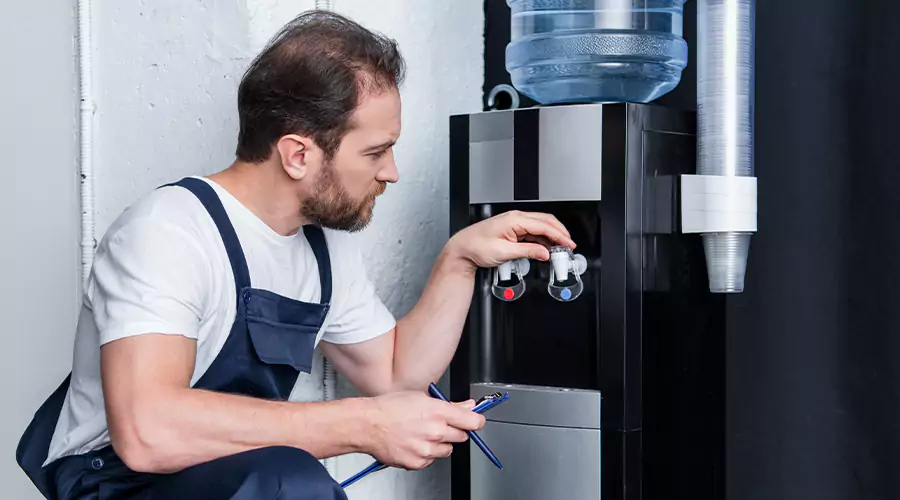
A water dispenser leaking from bottom usually means water is escaping from the bottle area or the internal water path. The leak often starts at a loose bottle connection damaged seal cracked reservoir drain plug valve or lower tube.
Stop using the dispenser until you find the source. Water on the floor can damage flooring and create an electrical risk when the unit has heating or cooling parts.
Quick Answer
A bottom leak usually comes from the bottle seat internal tank drain plug valve seal or lower tubing. A simple water dispenser leak repair often starts with reseating the bottle and emptying the drip tray.
A serious leak needs part testing when water returns after basic checks. Call a professional when the leak starts inside the cabinet or near electrical parts.
Common Causes of a Bottom Leaking Water Dispenser
A bottom leaking water dispenser often has one of a few common problems.
The table below can help you match the symptom with the likely cause.
| Problem | Possible Cause | What to Check First |
|---|---|---|
| Water under the unit | Loose drain plug | Rear or bottom drain area |
| Water after bottle change | Bottle not seated correctly | Bottle cap and connector |
| Slow dripping inside cabinet | Worn seal | Gaskets and fittings |
| Water near front edge | Full drip tray | Tray and overflow area |
| Leak during cooling cycle | Internal tank issue | Reservoir and tubing |
| Leak from bottom-loading model | Pump or hose issue | Bottle hose and lower cabinet |
Start With Basic Water Dispenser Troubleshooting
Safe water dispenser troubleshooting starts by unplugging the unit before inspecting any lower panels.
Quick Checks Before Repair
- Make sure the bottle sits straight and secure.
- Check the drip tray before removing panels.
- Inspect the floor after drying the unit.
- Look for cracks in the bottle.
- Unplug the dispenser before checking internal parts.
Check for a Dispenser Bottle Leak
A dispenser bottle leak can make the appliance look like it has a bottom leak. Remove the bottle and inspect the neck cap and sidewalls for cracks.
Replace the bottle if you see moisture around the cap or neck. If the leak stops after the bottle change the dispenser itself does not need repair.
Why Water Coolers Leak?
A water cooler leaking usually has a loose fitting damaged reservoir blocked drain cracked tube or bad bottle connection. Top loading units often leak near the bottle seat or reservoir.
Bottom loading units often leak near the pump hose or lower cabinet. Follow the water trail before buying parts because guessing wastes money.
Warning Signs Before a Bigger Leak
A leaking water cooler often shows small warning signs before water spreads across the floor. You hear dripping inside the cabinet or see moisture near the lower panel.
The drip tray can also fill faster than normal. Stop using the unit when water reaches wiring or control parts.
Valve Problems
A water dispenser valve problem can cause dripping weak flow or water pooling behind the front panel. The valve controls water movement from the reservoir to the spout.
If the valve sticks open water keeps dripping after use. If the valve cracks water escapes inside the appliance and needs part replacement.
Drain Plug Problems
A water dispenser drain issue sends water toward the floor instead of through the correct drain path. Some dispensers use a drain plug for cleaning or emptying the tank.
Check the drain cap and tighten it by hand. Replace the plug when the gasket looks flat cracked or brittle.
Seal and Gasket Problems
A water dispenser seal problem can happen around the bottle connector tank faucet or drain plug. Rubber seals wear out as the appliance ages.
Mineral buildup also stops a seal from closing tightly. Clean the area with a soft cloth and replace any cracked gasket before using the unit again.
Drip Tray Problems
A water cooler drip tray can overflow and make the leak look like it comes from the bottom. Remove the tray and empty it fully.
Wash the tray with mild soap and warm water. Replace the tray if you see a crack because a small split can drip onto the floor.
Bottom Loading Dispenser Leaks
A bottom loading water dispenser leak often starts at the bottle hose pump connection lower cabinet or internal tube. Open the lower door and inspect the bottle area.
Make sure the probe sits securely inside the bottle. If water appears while the pump runs the hose connector or pump seal needs service.
When the Dispenser Stops Working?
A water dispenser not working with a leak often points to a pump valve switch or tank problem. If no water comes out and the floor is wet water is escaping before it reaches the spout.
Check the bottle hose and internal tank first. Stop using the unit if it hums without dispensing because the pump is under strain.
Hot and Cold Models Need Extra Care
Hot and cold water dispenser repair needs extra caution because the appliance contains heating and cooling parts. A hot tank leak can release very hot water.
Unplug the dispenser and let the unit cool before inspection. Call a technician when water comes from a heated section or reaches electrical parts.
Step by Step Leak Check
Basic water appliance troubleshooting follows a safe order. Start with the bottle and drip tray because both parts cause common false leaks.
Next check the drain plug and lower cabinet. Then inspect visible hoses seals and fittings before assuming the tank pump or valve failed.
Cleaning Helps Prevent Leaks
Regular water dispenser cleaning helps prevent buildup around valves seals and drain areas. Clean the drip tray weekly when the unit gets heavy use.
Wipe the bottle seat each time you change the bottle. Sanitize the reservoir according to the manual and dry the lower cabinet when moisture collects.
Water Appliance Troubleshooting Steps
Troubleshooting Checklist
- Dry the appliance before checking the leak source.
- Replace a cracked bottle before testing again.
- Tighten the drain plug if water appears near the back.
- Empty the drip tray before assuming a major leak.
- Stop using the unit if water reaches wiring.
Maintenance Tips
Good water cooler maintenance reduces leaks and keeps water tasting fresh. Keep the appliance level so water flows through the correct path.
Do not force bottles into place because pressure can damage caps and connectors. Replace worn caps hoses and seals as soon as you see damage.
Maintenance Tips Checklist
- Keep the dispenser level.
- Inspect hoses and seals regularly.
- Replace damaged bottle caps immediately.
- Clean the drip tray weekly.
- Dry moisture inside the lower cabinet.
When Professional Repair Makes Sense?
Professional appliance leak repair is the right choice when water keeps returning after basic checks. A technician tests the valve pump tank hose fittings and internal tubing.
Service is also the best choice when the leak sits near wiring controls or a hot tank. Early repair protects floors and reduces the risk of mold under the appliance.
When to Call for Service?
Water dispenser repair is needed when the unit leaks from inside the cabinet or trips the outlet. Service is also needed when the pump runs constantly or the hot tank leaks.
A trained technician can tell you if repair or replacement makes better financial sense. This helps you avoid buying parts that do not solve the leak.
Repair or Replace the Dispenser
Small appliance repair makes sense for newer dispensers higher quality units and models with replaceable parts. Replacement makes more sense when an old unit has a cracked internal tank or several worn parts.
Compare the service cost with the price of a new dispenser. Also consider the risk of another leak when multiple seals hoses and fittings show age.
Final Thoughts
A water dispenser leaks from the bottom when water escapes from the bottle area drain plug drip tray seal valve reservoir or lower tubing. Start with the easiest checks before assuming the appliance failed.
Dry the area inspect the bottle empty the tray and check the lower cabinet. Schedule service if the leak continues because water can damage the floor and reach electrical parts.